





Toronto is one of the largest and most competitive business markets in Canada. Now, it’s not enough for small businesses to have just a website. Customers find local businesses on Google Search, Google Maps, reviews, social media and AI search platforms like ChatGPT and Claude. Small businesses can benefit from a strategic approach to SEO and ensure more prospects can discover them and buy from them.
SEO Strategies for Small Businesses in Toronto: A Helpful Guide
1- Toronto Business Landscape: 2026 Outlook

Toronto is a vibrant, diverse small business community. In 2025, Toronto had 74,560 business establishments, over 95% of which had fewer than 100 employees. The city also has 86 established Business Improvement Areas (BIAs) which indicate the significance of business activity at the neighbourhood level.
This leads to a high competition market, against not only the direct competitors, but also against the larger businesses and the national brands. For small businesses, it can be hard to target the broad keywords.
Fortunately, they can target their services, neighbourhoods, customer needs, and searches and target them specifically in local SEO, where relevance can make a difference.
2- What SEO Services are Offered?

When you onboard an SEO agency, you can look forward to multiple points of optimization
2.1- On-Page SEO
On page optimization enhances the elements and content on the website that are seen by the visitors. The elements covered here are title tags, headings, URLs, internal links, images, metadata and service-page content.
2.2- Off-Page SEO
Off page SEO increases the authority of your website beyond its own pages. This includes backlinks, local citations, industry associations, community groups, local reviews or local publications. True engagement with businesses and the media in the local community can help establish visibility and credibility for Toronto businesses.
2.3- Technical SEO
Technical SEO makes it easier for search engines to crawl, comprehend and index your website. It covers mobile usability, page speed, HTTPS, XML sitemaps, broken links, redirects, canonical tags, structured data, website architecture.
2.4- Answer Engine Optimization
Your brand needs to appear in answers appearing on AI Overviews, Google AI Mode, ChatGPT and other answer engines. For this the content should provide a direct answer to the topic’s question upfront, structure it well, use relevant entities and local context. For Toronto businesses, AEO can expand visibility that goes far beyond traditional search results.
3- How Small Businesses in Toronto Can Benefit from SEO?

The high demand and high competition for businesses like yours means you need a strategic way to stand out from the crowded online space. SEO in Toronto can accomplish this goal.
3.1- Reach High-Intent Customers
SEO can reach out to people who are looking for what you’re providing. Informational searches are like “emergency plumber near me” or “accountant in North York.” Informational searches are more commercial in intent than informational searches. Optimizing for these commercial terms can bring visitors who are closer to contacting or purchasing from a business.
3.2- Boost organic visibility
Paid advertising can deliver immediate visibility. But traffic generally dries up when the advertising budget is spent. Optimizing service pages, optimizing local content and website authority. Developing a more sustained source of organic traffic through SEO can help you. It can then work in tandem with paid advertising and lessen the reliance on any one marketing channel.
3.3- Target Toronto Neighbourhoods
Neighbourhood/area names are often included in searches. If the company provides services in Scarborough, Etobicoke, North York or East York, then it may choose to optimize for the searches that are made in those areas. So, smaller companies can target more specific searches and not broad Toronto-wide keywords.
3.4- Create Long-Term Marketing Assets
A useful service page, neighbourhood guide, FAQ page or case study can keep visitors coming. Businesses can create more links, reviews, and brand recognition as they develop their content. With content creation, links, and reviews, businesses can create a stronger search presence overall.
4- Local SEO Strategies Specific to Toronto Markets
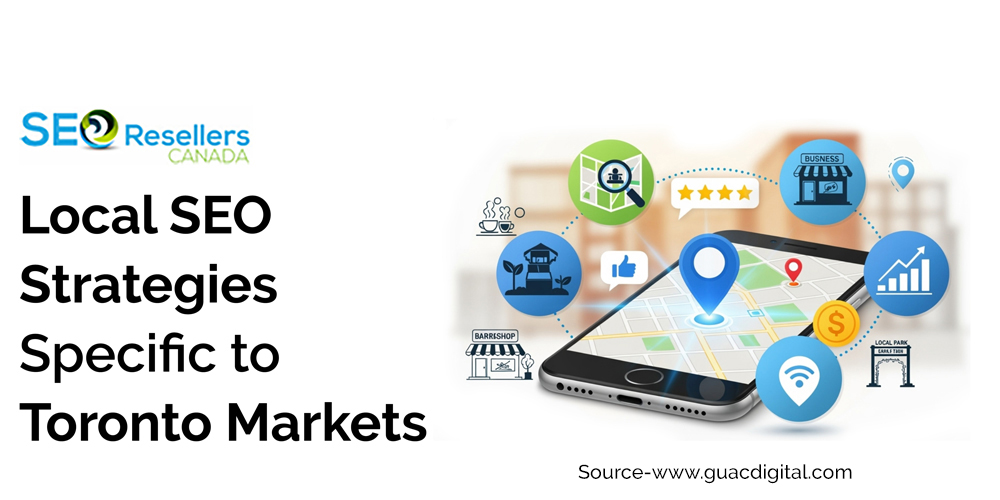
Local SEO doesn’t work by simply adding “Toronto” to web pages. Due to its geography, local businesses can benefit by optimizing for distinct neighbourhoods and commercial areas.
4.1- Google Business Profile Optimization for Toronto Neighbourhoods
Maintain an up-to-date and complete Google Business Profile. Review your business category, services, phone, web, working hours, pictures, address and service area and more. Promote and respond to honest customer reviews.
4.2- Local Citation Building in Canadian Directories
Create uniform listings in pertinent Canadian, industry and local directories. Your business’ name, address, phone number and website should be kept consistent. Also, you may think of being cited on industry associations, chambers, local organizations, and relevant Toronto directories.
4.3- Neighbourhood-Specific Keyword Research
Search behaviour is different throughout Toronto. Research examples of combinations of services and locations, e.g., “roofer North York” or “physiotherapist Scarborough.” Take care of using real customer language when choosing targets.
4.4- Create Location-Specific Service Pages
For businesses that operate in more than a single location, it is beneficial to develop location-specific pages if there is enough information that is unique to those locations. For instance, an HVAC company could design a Scarborough service page with information about its services, coverage, frequently asked questions, and contact details.
5- Content Marketing Strategies for Toronto Small Businesses

Local content can be used to engage customers at various stages in the buying journey. The emphasis must be on providing answers to actual queries and establishing local credentials, not on adding words to websites.
5.1- Creating Locally Relevant Content
Develop content based on questions Toronto customers ask. A roofing company can post “How much does roof replacement cost in Toronto.” A clinic can have a list of common questions asked by patients in the community. Local references must have a purpose other than being used for the sole purpose of keywords.
5.2- Leveraging Events and Culture in Toronto
Many festivals, sporting events, exhibitions and community events are happening throughout Toronto across the year. When there is a natural link to a business’s services, it will be able to create timely content. For instance, a restaurant could produce a neighbourhood dining guide for a big event, or a store could produce seasonal shopping content.
5.3- Write Local Guides
Put together guides that share solid tips about your expertise. For instance, “Insurance for Small Businesses in Toronto” or “How to Pick a Family Dentist in North York.” These posts can answer common questions and still point readers to the right services.
5.4- Answer Customer Questions
Look for content opportunities in sales calls, reviews, e-mails and with customer conversations. Convert typical inquiries into a blog post, FAQ’s and service page sections. This maintains the relevance of the content to real customer needs and can assist the website get targeted by information, commercial and transactional searchers.
6- Tracking SEO Success for Small Businesses
Instead of focusing on search rankings, focus on business outcomes when measuring SEO. Track and measure organic traffic, impressions, clicks, keyword visibility, Google Business Profile interactions, phone calls, form submissions, bookings and revenue (where applicable). Use Google Search Console to check search results, then review analytics data. Add call tracking so you can match organic visits to real enquiries. Look at results by service and by location. This will help you spot which offers are bringing the best leads.
7- Common SEO issues for local businesses in Toronto

7.1- Going up against large companies
Big companies usually have more backlinks. They also tend to have stronger sites. They often have more pages and brand recognition. That said, smaller companies can still get results. They can aim at what is specific. They can focus on local needs. They can pick certain services and nearby areas. They can also use longer search phrases.
7.2- Limited Resources
It’s often not possible for many small businesses to have their own full-time SEO specialist. Hence, it is better to focus on the most significant activities – service pages, technical fixes, optimizing your Google Business Profile, review and local content – rather than doing it all at once.
7.3- Competitive Local Keywords
Competitive terms like “Toronto dentist” or “Toronto lawyer” are very general. Businesses should seek out more specific opportunities for specific services, areas, and customer inquiries.
8- How AI Search Impacts Local SEO

Search is being transformed by AI, reshaping the way customers find and assess businesses. Google has extended AI Overviews and AI Mode to provide more opportunities for users to receive answers, rather than just searching for information. This emphasises the necessity of content that is easy to understand, helpful and showcase expertise of Toronto businesses.
It is a tactical move to continue building on their websites, Google Business Profiles, reviews, structured information and credible local mentions. Content should be answer-driven and show some subject matter expertise. They should also optimize for AI search.
9- Conclusion
SEO makes it easier for a customer to find your business online and engage with it. These steps will definitely help in local SEO in Toronto
As search continues to transform with AI-driven experiences, producing relevant, useful, and local content will continue to be a critical factor in establishing online visibility.
10- FAQs
10.1- How long does SEO take for a small business in Toronto?
The timeline of SEO depends on the competition, state of the website, authority and strategies. Some gains can be made in just a few weeks. Real organic growth takes place over a period of a few months.
10.2- How local SEO benefits Toronto companies?
Local SEO helps your business to show up for searches conducted in a specific geographic area on Google Search and Google Maps. Clear details, feedback, content and local authority can help enhance local visibility.
10.3- How much does SEO cost for a small business in Toronto?
SEO pricing can swing quite a bit. The main reason is competition in your area. The size of your site matters too. So does the amount of work you want done. It also depends on how broad the plan needs to be. An SEO audit can clarify priorities. It can also help you choose a monthly budget that matches your goals.

About The Author

For over 18 years we have been the solution to fit any size agency or business. Our team of creative SEO experts and marketers develop some of the best results driven campaigns in the industry.
E-Commerce Marketing Strategies to Boost Sales

The Ultimate Guide to Writing SEO-Friendly Content
A forward-looking digital marketing agency knows that content is the fuel that fires up success in SEO campaigns. It will be an understatement to say that high quality content is the catalyst that enables SEO success.

What Should You Consider When Developing Your Website Content?
You might have a well-made website, but is it getting the job done? Are you getting the traffic that you want? Well, there are many factors that go into website development and design to change a visitor into a paying customer.
What is local SEO, and How Does It Function?
The process of optimising your website for a particular local market is known as local SEO. Any SEO plan aimed at clients in a particular area, city, or neighbourhood must include a local search.

20 Benefits of SEO That Every Business Needs to Know
In the current business world, there are many advantages of search engine optimization, or SEO, and it is extremely important in establishing a successful business and in getting