The world of web search has flipped upside down, and eCommerce businesses cannot afford to ignore it in 2026. AI overviews, answer engines and smart shoppers have rewritten the rules. It is no longer about chasing keywords and hoping for the best. To rank well in web search results, you’ll need
- real topical authority,
- a site that feels flawless to use
- robust technical foundations, and
- content that genuinely answers what people are asking.
The good news? Organic search is still one of the most reliable, profitable ways to bring in buyers who are ready to spend.
This guide walks you through the strategies, on-page tactics and emerging trends that leading eCommerce SEO services teams use to improve rankings and increase revenue.
1- Why Does eCommerce SEO Matter More in 2026?
In 2026, eCommerce Search Engine Optimization (SEO) holds a significant position because buyers are now searching in more specific ways. They do not merely type two words on the web like “Running Shoes” or “laptop bags”. Instead, they are asking detailed purchase-focused questions, such as:
- “Best waterproof hiking boots for women”
- “Organic dog food for sensitive stomachs”
- “Standing desk under $300”
- “Best ergonomic chair for lower back pain”
- “Noise cancelling headphones for travel”
These searches represent a strong purchase intent. When you give answers in the right way with useful details and a clear buying path, SEO becomes a revenue channel.
2- What Is The Core eCommerce SEO Strategy in 2026?

Ranking an online store requires more effort than publishing blog content or adding keywords to the product descriptions. These days, search engines evaluate whether your store’s webpages meet the commercial intent, whether the site structure is easy to understand and whether users can move from product discovery to checkout seamlessly.
At its core, a strong eCommerce SEO strategy is built on the following three pillars:
- Relevance: Your target keyword must match what buyers are searching for. Pay special attention to long-tail keywords used in search engines, marketplaces and AI-powered chatbots.
- Structure: Organize your product pages, category pages, internal links and schema markup so that the search engines can understand your inventory and product pages.
- Experience: Improve the webpage loading speed in both mobile devices and desktops. Besides, intuitive website design helps buyers to navigate your website, read product reviews and check out conveniently.
A strong SEO approach strengthens all three pillars. Relevance brings the right visitors, structure helps to rank your site on Google and AI search engines. It also leads to better user experience that turns visitors into customers.
3- How to Increase Online Sales Through SEO and Organic Search?
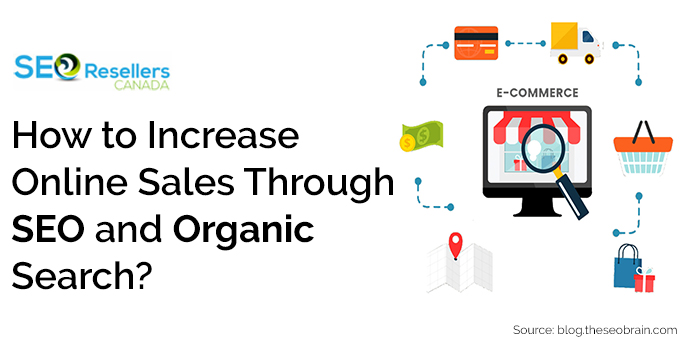
SEO increases online sales when it brings buyers to the right category pages and makes their next step clear. This is one of the primary reasons many growing eCommerce brands invest in organic SEO Services to attract customers who are actively researching products and ready to purchase.
3.1- Prioritize Product and Category Pages
Product/Category pages are high-intent pages that align with a commercial search behavior and drive conversions. To engage in organic search marketing and make it a sales channel, here’s what you need to do:
- Include simple buying tips on category pages
- Highlight benefits, not just specifications of the product
- Include internal links to content and products in blog posts
- Show reviews and ratings closer to the purchase process
- Ensure that prices, inventory, shipping and return information are always updated
- Optimize for faster loading and smoother checkout on mobile devices
3.2- Use Product Data to Improve Search Visibility
Product visibility is also connected to how well search engines can understand product data. Rich product information can help pages appear with details such as price, ratings, availability, shipping and returns. Important product data includes:
- Product name
- Price
- Availability
- Ratings
- Shipping details
- Return information
- Images
- Product identifiers where applicable
4- What Are Proven Keyword Research Strategies for eCommerce SEO?
SEO keyword research needs to be centered around the shopper’s intent and not just the volume of searches. The main intent of eCommerce keyword research is to link category, product, comparative and question keywords to a specific page type.
Correct keyword research in 2026 is all about buyer intent. Businesses often use SEO consulting to uncover high-intent search opportunities that competitors may be overlooking.
Shoppers use groups of keywords based on the phase of the Buyer’s journey. The most common keywords include:
- Category keywords: “women’s running shoes,” “solid wood dining tables”
- Subcategory keywords: “wide fit running shoes,” “extendable oak dining tables”
- Product keywords: brand names, models, colors, sizes and variants
- Comparison keywords: “memory foam vs hybrid mattress”
- Problem-led keywords: “best mattress for back pain”
- Question keywords: “how long do trail running shoes last”
- Transactional keywords: “buy organic skincare online”
5- How Should Product Pages Be Optimized for Rankings and Sales?
Product pages should convey both a sense of what the product is and assist in the purchasing decision. The pillars of a strong product page SEO are unique content, structured data, elements of trust and addressing the buyer’s objective for making the purchase.
5.1- Make Product Pages Useful for Search Engines and Shoppers
The ideal product page is optimized for search visibility and conversion. It needs to assist search engines in understanding the product and also helps buyers make their purchase decisions.
The most effective on page SEO strategies include:
- Clear product name in the H1
- Unique product description
- The benefits, use cases and product specification
- Clear images and clearly descriptive alternative text
- Price, availability, shipping and return information
- Reviews, ratings and customer Q&A
- Product structured data where eligible
5.2- Answer Buyer’s Search Intent on the Product Page
You should avoid using only manufacturer descriptions. Duplicate product copy makes it harder for your page to stand out and often fails to answer real buyer questions. If buyers commonly ask whether a jacket is waterproof, if a table needs assembly, or whether shoes run true to size, include those answers directly on the page.
6- How Can Reviews Support SEO?
Reviews increase consumer confidence at the same time as adding valuable content to your product page. This improves rankings and increasing conversions through real-life experiences of the product quality.
Additionally, reviews enable search engines to get new content regarding product descriptions. Customer reviews may contain the type of terminology not found in official product manuals, such as “fit wide feet,” “easy to assemble,” and “suitable for apartments” or “works well for travel.” Helpful, reliable reviews always show expertise, trust and real value for people, not just search engines.
7- What Can an eCommerce SEO Audit Reveal About Your Store's Growth Potential?

Professional SEO services often begin with a detailed audit because it provides a clear picture of the technical, structural, and content-related issues affecting performance.
A few issues that are commonly addressed during an audit are:
- Duplicate or thin product content
- Broken internal links
- Crawl and indexing gaps
- Slow-loading pages
- Mobile usability issues
- Fixing the placement of products using the same category keywords
A comprehensive audit also enables you to determine your focus area in SEO. Whether it is redesigning category pages, navigating site structure or writing better product information, an audit gives you clarity on what to prioritize.
8- Final Thoughts
eCommerce SEO for 2026 is all about the growth stack built around relevance, structure, and experience. Being ranked higher isn’t all about keyword stuffing and multiple blogs anymore. Rather, it is all about
- building a logical structure of categories,
- improving product information and answering questions from customers,
- improving mobile experience, and
- ensuring that customers can trust your website for making a purchase.
These principles work across online marketing in Canada across industries for online businesses.
9- FAQs
9.1- How Often Should I Update My eCommerce SEO Strategy?
You should check on your eCommerce SEO strategy at least every three months to check changes in the demands for products, searches and competitors’ pages.
9.2- Why are Images Important in eCommerce SEO?
Images in webpages, product descriptions and eCommerce SEO campaigns play a very important role. It helps to rank the webpage for image search and engages more visitors.
9.3- Should I remove out-of-stock product pages?
It’s not advisable to delete the pages that are out of stock, regardless of how well they’re ranking, since they could be useful and even be linked to. It would be better to keep the page active and also to let the users know when the products will be restocked, some similar products could be suggested and structured data should be used.
9.4- Does Blogging Help My eCommerce SEO in 2026?
Blogging helps your eCommerce SEO strategy only when the content is related to the purchasing experience. You should use the blog to give answers to various questions, such as comparisons, sizes, uses, etc., and lead customers to categories/products.
9.5- How Can I Compete With Big Companies in eCommerce SEO?
You can compete with big companies by using long-tail keywords, taking help from SEO experts and answering detailed questions that the bigger players may ignore. Besides, you can attract more customers through your expertise in your business, unique product images, and robust customer support.