Search results still decide where most buyers start. Roughly 75% of clicks on a search results page go to organic listings, while paid ads pick up the rest. This single number explains why so many business owners pause before they spend another dollar on ads. If you are trying to decide between SEO services and pay-per-click campaigns, the honest answer is that both channels do different jobs. This guide breaks down the real differences in cost, speed and long-term value, based on current industry data, so you can choose with confidence.
Whether you are a small business owner planning your first marketing budget or a marketing manager reviewing channel performance, this comparison affects how you spend, how fast you grow and how sustainable that growth will be.
1- What is SEO and How Does it Work?
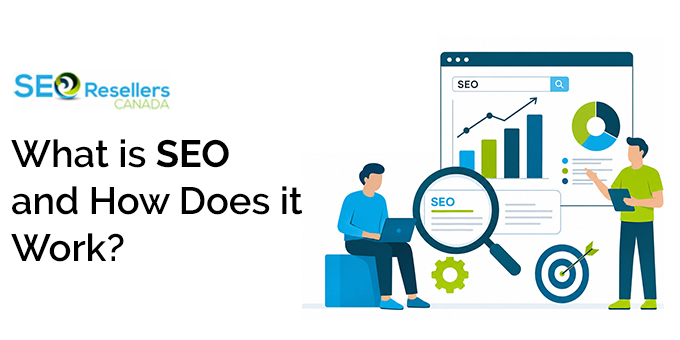
Search engine optimization means improving a website so it climbs higher in unpaid, organic results. This covers technical fixes, content work, keyword targeting and trust-building through strategies like backlinks. Done properly, SEO services let a site earn visibility instead of buying it click by click.
It is worth remembering SEO isn’t a one-and-done task; it is ongoing. It is because Google adjusts its algorithms constantly, and competitors keep publishing. A page that ranked well last year can quietly fall in rankings if nobody maintains it.
1.1- Core Components of SEO
A solid SEO strategy generally rests on three pillars:
- On-page SEO- title tags, headers, internal linking, content quality
- Technical SEO- site speed, mobile usability, indexing, structured data
- Off-page SEO- backlinks, citations, brand mentions elsewhere online
Any SEO company worth hiring will audit all three before proposing a plan. Skipping even one can make the results suffer.
2- What is PPC and How Does it Work?
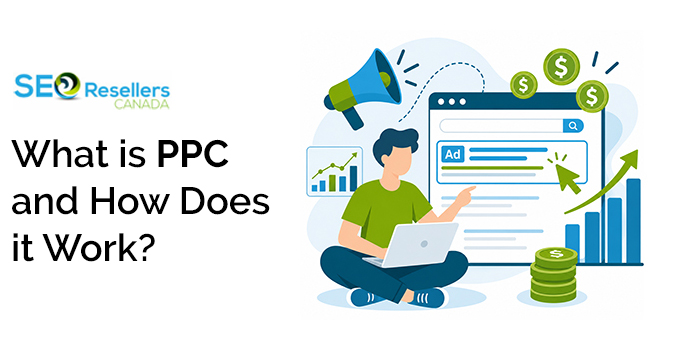
Pay-per-click advertising works on bidding. Businesses bid on keywords, so their ads show up at the top of search results or across other platforms, and you only pay when someone actually clicks. Google Ads and Microsoft Ads both run on this auction model.
Campaigns can go live in a day, sometimes less. This speed is exactly why businesses lean on PPC services when they need traction on a page fast, including a product launch or a seasonal push, whatever the moment calls for.
2.1- How PPC Campaigns are Structured
A typical campaign involves:
- Keyword research and bid strategy
- Ad copy and landing page design
- Budget allocation across campaigns
- Ongoing bid adjustments and A/B testing
Agencies offering pay-per-click management services handle these moving parts, so budgets are not wasted on the wrong keywords or poorly matched audiences.
3- SEO vs PPC: Speed of Results
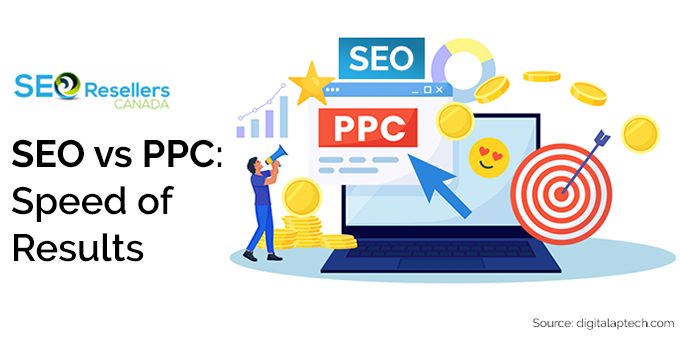
This is really where the two channels differ the most. PPC can bring in traffic within hours of going live. SEO, on the other hand, tends to take three to six months before you see real movement. And for competitive keywords, six to twelve months isn’t unusual before you are anywhere near page one.
This does not mean SEO is slow in a bad way. It just means that SEO builds a foundation that keeps paying off well after the initial work is complete. PPC traffic, by contrast, stops the moment you stop paying. Organic rankings, once you’ve earned them, tend to hold their position with regular upkeep.
If you need leads immediately, most businesses find a blend works best. Run PPC to cover the gap while SEO has time to mature.
4- SEO vs PPC: Cost Over Time

PPC costs scale with clicks, and they never really stop. Every visitor cost something, converted or not. SEO has upfront costs for strategy, content, and technical work, but once that traffic starts flowing, it doesn’t carry a per-click tag.
Looking at a 12-month window, businesses that stay consistent with organic SEO investment often end up with a lower cost per lead than those relying solely on ads. Ranked content keeps attracting visitors without additional spend each time, whereas every PPC click means another draw on the budget.
Still, PPC has one clear edge: control. You set a daily cap, and you can pause the campaign immediately when something’s underperforming. SEO doesn’t offer this same immediate control. Rankings move on their own timeline, shaped by more than just budget.
4.1- Why Trust Plays a Role in Cost Efficiency
There’s a trust gap too. Plenty of searchers skip sponsored results entirely and head straight for the first organic link. This trust tends to translate into better engagement and lower bounce rates from organic traffic, which in turn strengthens the return on any digital marketing services built around SEO.
5- Which Channel Delivers Better Long-Term Value
Search visibility compounds. A well-optimised page published this year can keep generating leads years down the line, as long as it gets refreshed periodically. This compounding effect is one of the stronger arguments for investing in SEO consulting early, even if the payoff takes a few months to show up.
PPC just doesn’t compound the same way as SEO. Cut the budget, and the traffic disappears with it. This makes PPC a better fit for short-term needs. This includes clearing out inventory, testing a new offer, or promoting something with a time-limited deadline.
6- How to Decide Between SEO and PPC

Really, it comes down to your goals, your timeline, and your budget. Here is a simple way to think about it.
6.1- Lean toward PPC when you need
- Immediate traffic for a launch or promotion
- Precise control over daily spend
- Fast testing of new keywords or offers
- Short-term visibility for a specific window
6.2- Lean toward SEO when you need
- Long-term, compounding traffic growth
- A lower cost per lead over time
- Stronger trust as well as credibility with your audience
- A presence that doesn’t vanish the moment spending stops
Most established brands land on using both eventually. An SEO agency that also understands paid media can help balance the two without duplicated effort or wasting the budget on overlapping keywords.
7- Common Mistakes Businesses Make
A common trap is leaning too heavily on PPC without ever building organic authority, or the opposite, expecting SEO to deliver overnight and giving up before it has a chance to work. Both approaches waste money.
It’s also a mistake to think of SEO and PPC as competitors instead of teammates. The PPC data on which keywords actually convert can flow straight into the SEO content strategy. And good organic rankings can reduce the cost of your PPC for branded terms, as you don’t have to pay to show up somewhere you already rank for free.
It also pays to stay on top of algorithm shifts and search behaviour. You can use reliable forums and sites to track daily changes in how search engines rank and display content, which can help you adjust before a traffic drop turns into a real problem.
8- Building a Balanced Strategy
A balanced approach starts with an honest audit. The notion is to uncover where your rankings stand today, your site’s technical health, what competitors are doing and how your existing ads are performing. From there, you can allocate budget across both channels based on what the business actually needs right now.
A brand-new business that doesn’t have rankings yet may want to focus more on PPC initially and then transition over to SEO as organic traffic grows. A more established business with decent rankings might be heavy on the organic SEO services and only save PPC for product launches or competitive keyword gaps.
This is where a full-service SEO company earns its keep. Instead of managing two separate vendors, one team can align the two strategies, so they support one another, rather than competing for the same budget and attention.
9- Conclusion
SEO and PPC aren’t rivals fighting over the same job. They solve different problems. PPC gets you speed and control. SEO gets you compounding growth and deeper long-term trust with your audience. The businesses that come out ahead are usually the ones who stop debating which channel wins and start figuring out how to make both work together.
If you are not sure where to begin, talking to a team that handles both digital marketing services and has a dedicated SEO consulting services can help you build a plan that actually fits your budget, timeline, and goals.
10- FAQs
10.1- Is SEO better than PPC for a small business?
The answer depends on your timeline. If you need leads now, PPC moves faster. If you are keen on building authority for the next one to three years, then SEO usually wins on return per dollar over time.
10.2- How long does SEO take to show results?
Most businesses see tangible movement in three to six months. Certain competitive industries or keywords can take six to twelve months to reach page one.
10.3- Can I run SEO and PPC at the same time?
Yes, and plenty of businesses do exactly that. PPC data can steer SEO content decisions, and strong organic rankings can bring down PPC costs on branded terms.
10.4- What does an SEO agency actually do each month?
Typically, an SEO agency focuses on content updates, technical audits, link building, performance reporting, and making adjustments based on ranking shifts or algorithm changes.
10.5- Is PPC a waste of money if I already rank well organically?
Not really. PPC is still useful for new product launches, seasonal promotions, or competitive keywords where it takes time to build an organic ranking.